How to set credit limits for your shop's customers
Base each customer's limit on one pay cycle of their normal purchases, start new customers low, pair every limit with a due date, tell the customer, and review limits monthly.
On this page
Set each customer's credit limit at about one pay cycle of what they normally buy from you: a week's shopping for someone paid weekly, a month's for someone paid monthly. Start new customers lower, raise the limit after they pay on time, and lower it after they do not. Pair every limit with a due date, tell the customer what both are, and review them once a month.
A limit is not a sign of distrust. It is a promise that works both ways: the shop knows how much it has out, and the customer knows how much they can take without an awkward conversation.
Why limits matter
- Your cash is your stock. Every rupee of credit is a rupee you cannot spend on restocking.
- Balances grow quietly. Without a ceiling, a customer who pays a little less than they take drifts further behind every week, and it is hard to notice until it is large.
- Staff need a rule. "Can I give credit to Ahmed bhai?" is much easier to answer when the answer is written down.
- It protects the customer too. A balance that stays manageable is one they can actually clear.
A simple way to set the number
Look at one customer at a time and ask two questions:
- How much do they usually buy from you? Check a few weeks of their entries.
- How often are they paid? Weekly, monthly, or by harvest or season.
The limit is roughly what they buy between two pay days. If a family normally spends about a month's groceries on credit and clears it on salary day, that month is the natural limit. For a daily-wage customer who pays every Saturday, it is about a week.
Then adjust for trust:
| Customer | Starting point |
|---|---|
| New, or not well known | About a week of purchases, or cash only at first |
| Regular, pays on time | One full pay cycle |
| Long-standing, always pays | One pay cycle plus a margin for bad weeks |
| Late on recent payments | Lower, or zero until a plan is agreed |
These are starting points, not rules. Your own experience with a customer counts for more than any table.
Pair every limit with a due date
A limit says how much; a due date says until when. One without the other leaves a gap:
- A limit with no date lets a balance sit at the ceiling forever.
- A date with no limit lets the balance grow without bound until that date.
Agree the date when you agree the limit: salary day, the end of the month or every Saturday. See How to manage credit in a kiryana or general store for the rest of the routine.
Tell the customer
A limit the customer knows about feels fair. A limit they discover at the counter, in front of others, feels like an insult. When you set it, say it plainly: "Your credit can go up to Rs 10,000, and we settle on the 1st."
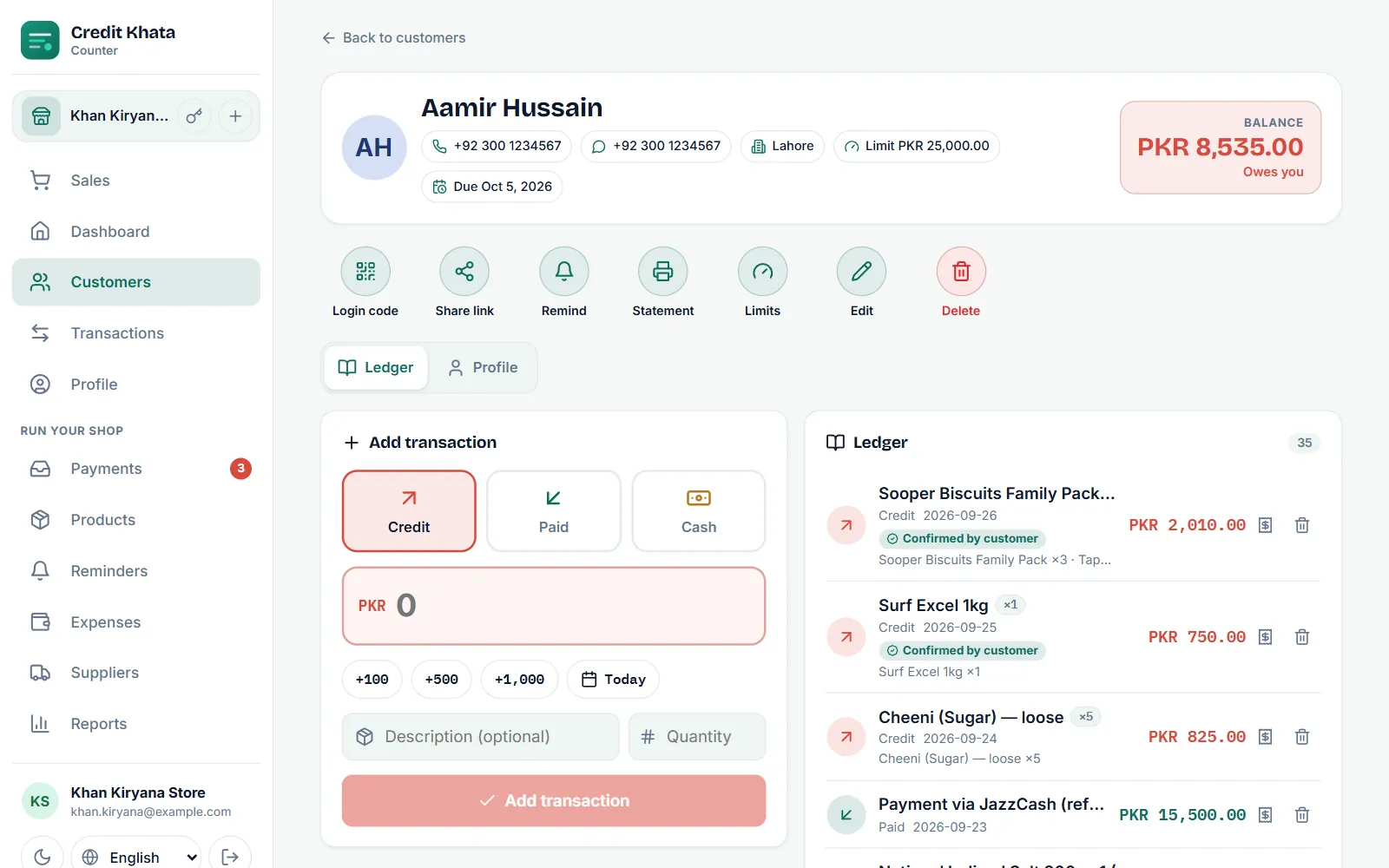
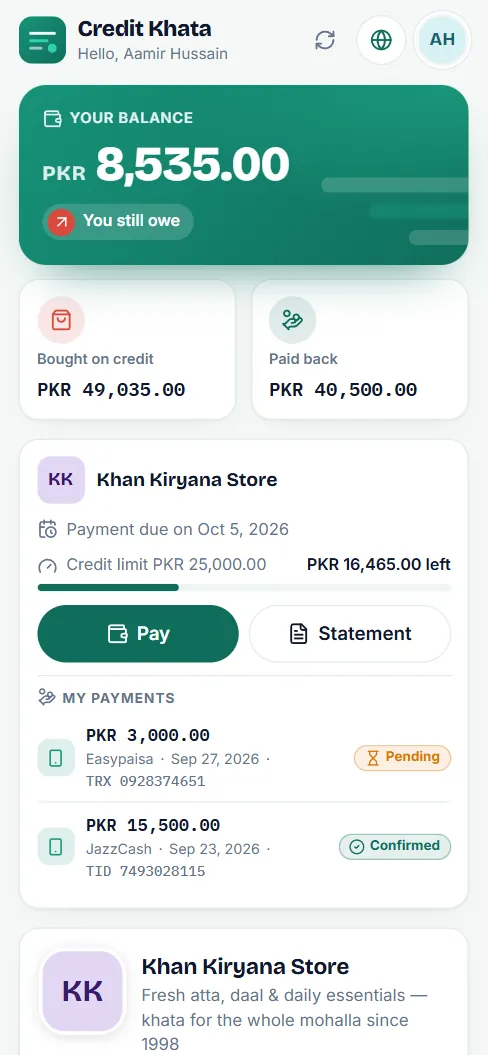
If the customer can see their own account, even better. In Credit Khata, the customer's account shows the credit limit, how much is left and the due date, so they can plan their shopping before they reach the counter.
Review limits regularly
Once a month, go down your list:
- Paid on time? Consider raising the limit a little.
- Paid late once? Leave it and remind earlier next time.
- Paid late repeatedly? Lower it, or pause credit until a plan is agreed.
- Stopped coming in? Check whether the balance is the reason, and reach out privately.
Reviewing is what turns a limit from a number you set once into a tool you actually use.
Exceptions and emergencies
There will be times when a good customer needs more: a family emergency, medicine at a pharmacy, a wedding in the house. Decide these case by case, and let one person decide, usually the owner. Write the exception down so it does not quietly become the new limit.
The mistake to avoid is letting whoever is at the counter make these calls under pressure. That is how limits stop meaning anything.
Setting limits in Credit Khata
In Credit Khata, open a customer's page, tap Limits, enter the Credit limit, choose a Pay by date and save. From then on:
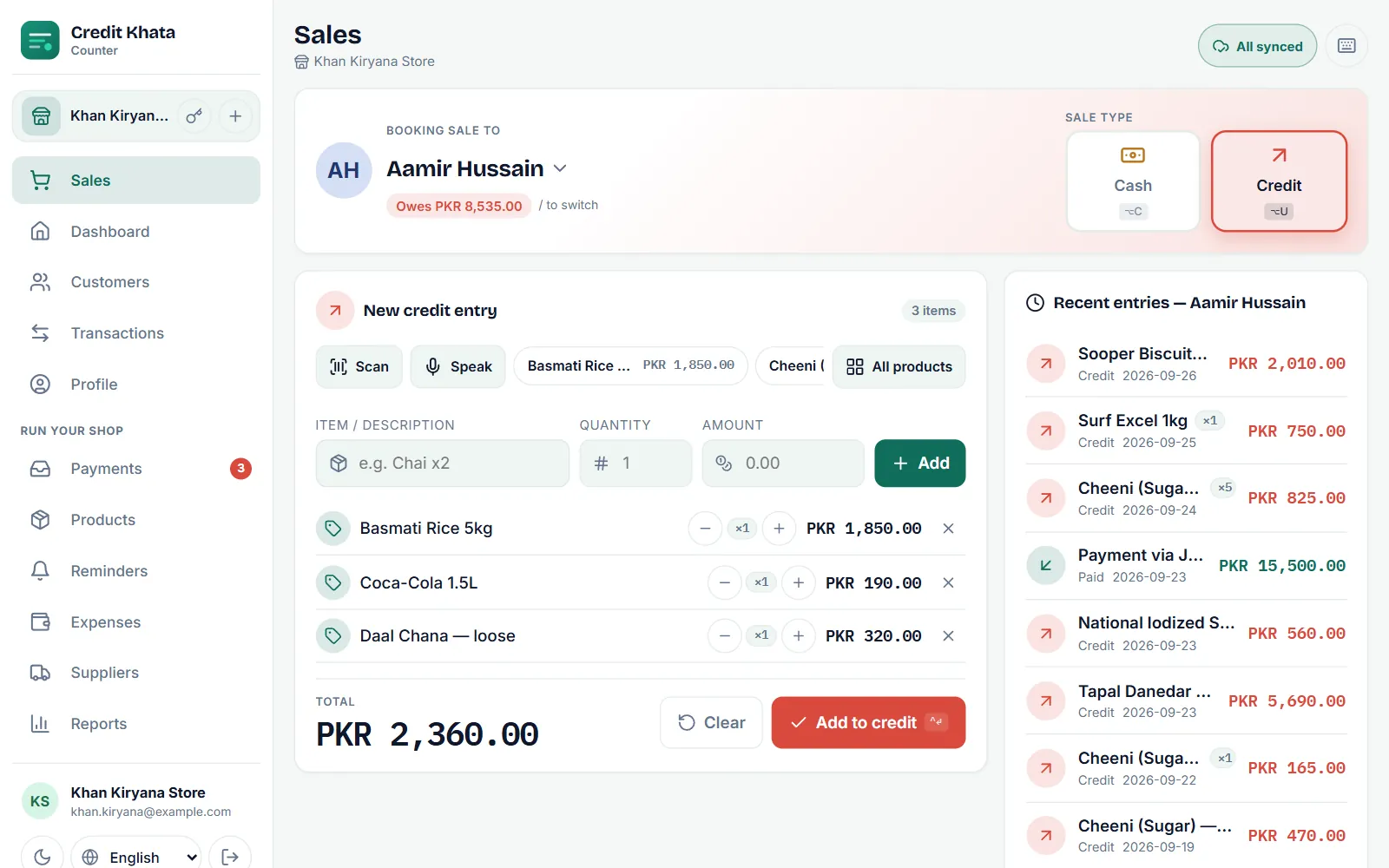
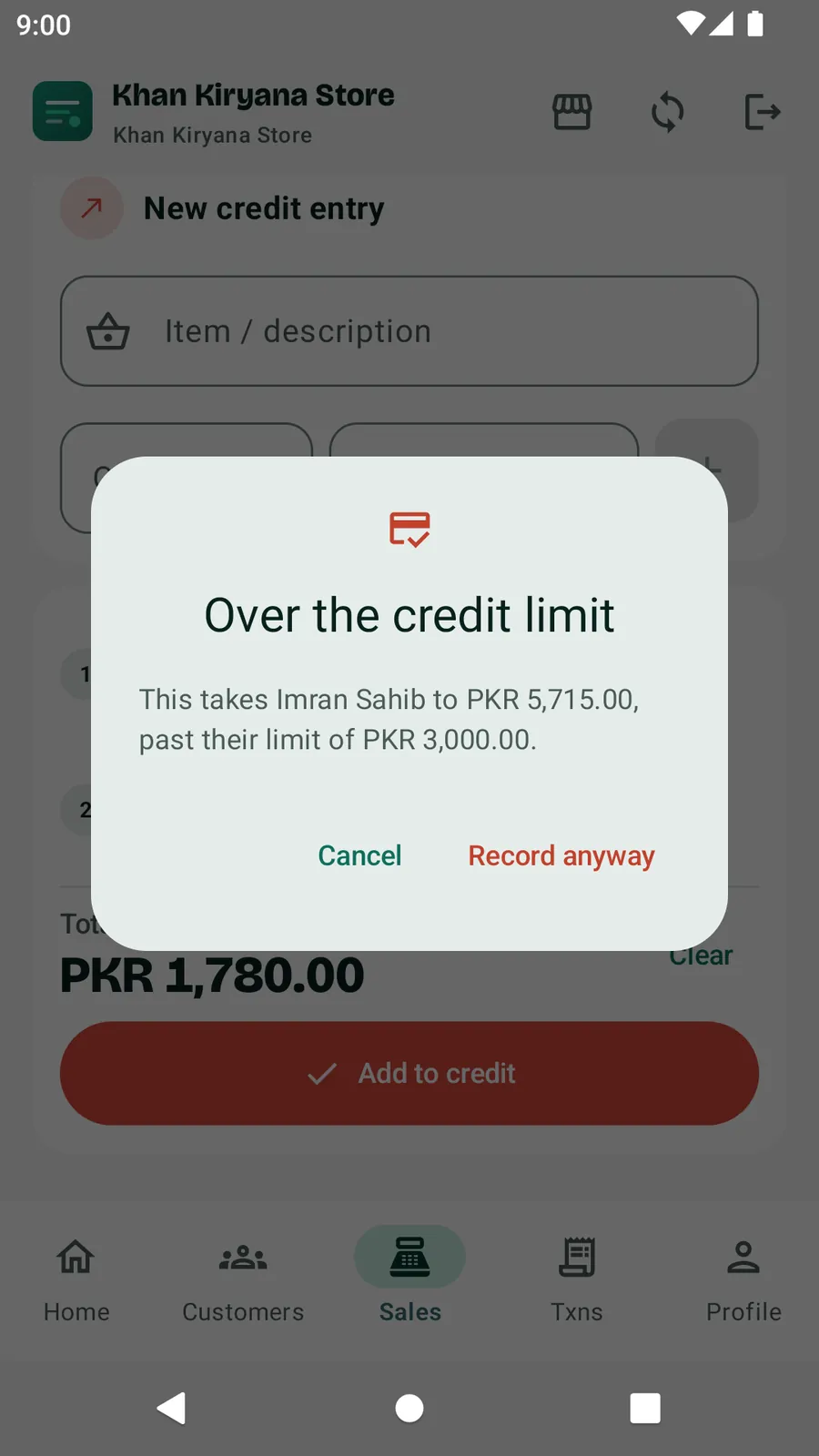
- The counter warns before a credit sale would take the customer past their limit.
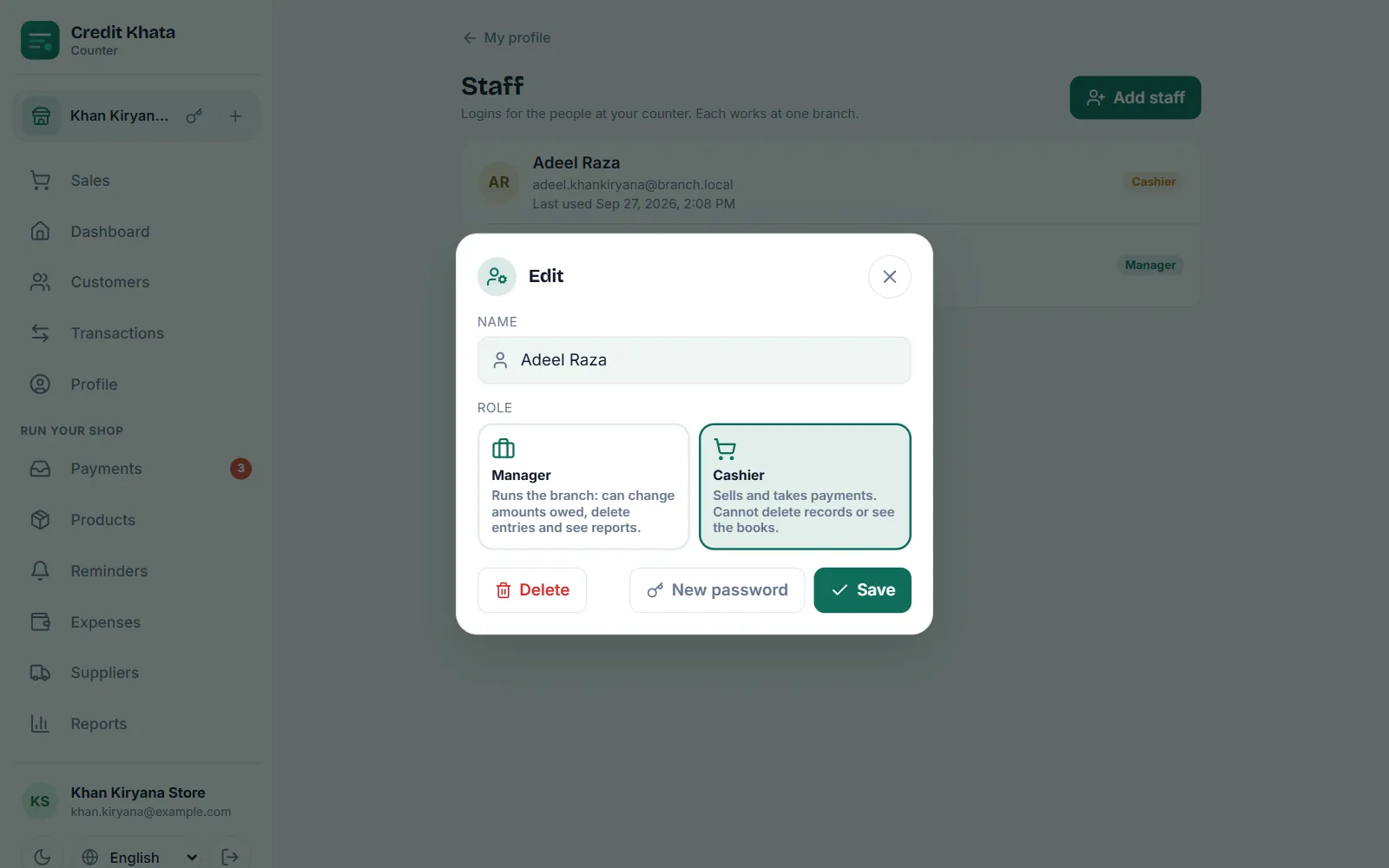
- An owner or manager can choose to book it anyway; a cashier cannot, so staff never have to argue at the counter.
- When an owner or manager does go over a limit, it is logged.
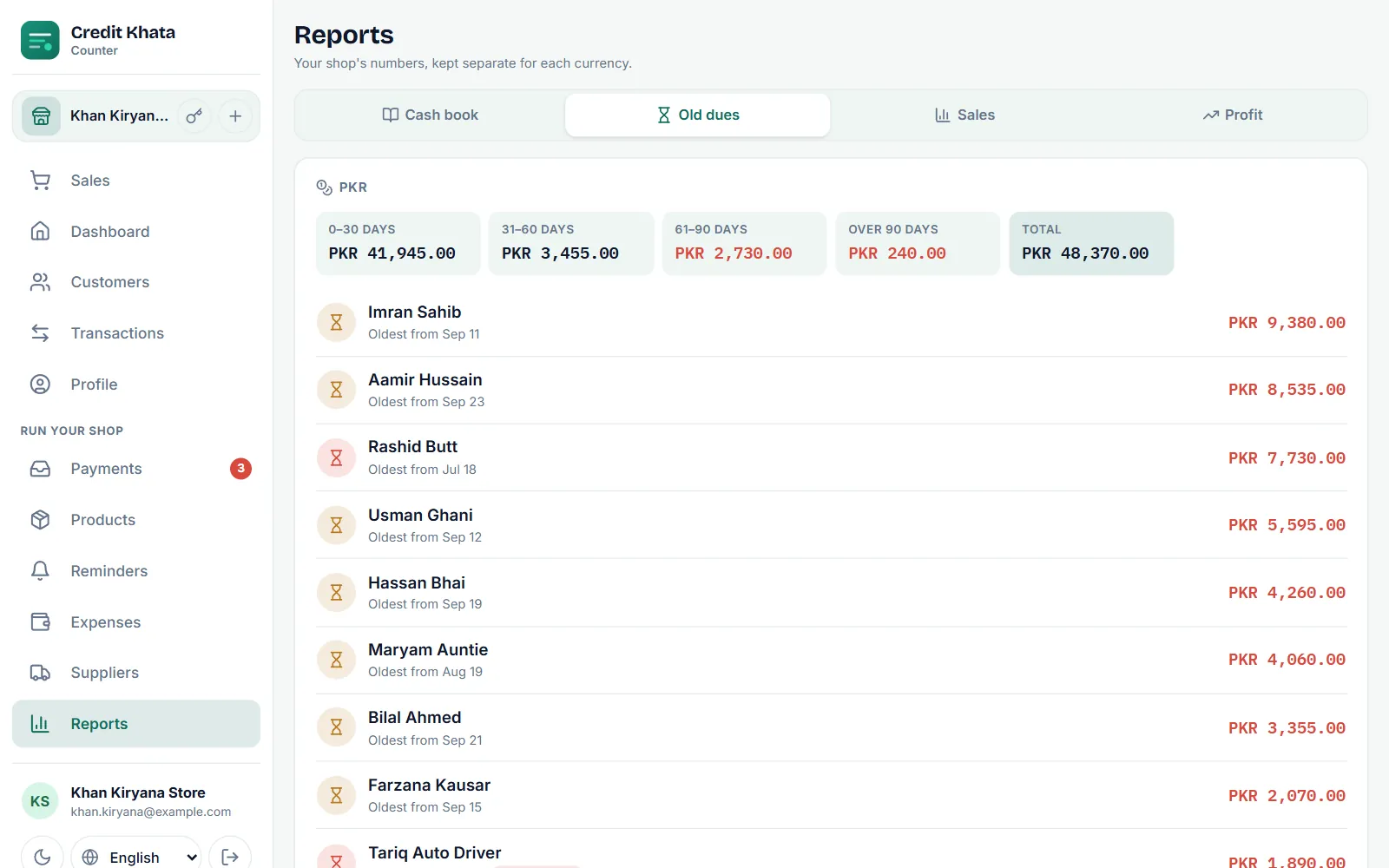
- Customers past their due date are marked Overdue and listed for a one-tap reminder.
Only the owner and managers can set or change limits. The step-by-step is in Set a credit limit and a due date for a customer, and roles are explained in Give staff their own logins: manager or cashier.
Common mistakes
- One limit for everyone. It is too tight for your best regulars and too loose for newcomers.
- Never reviewing. A limit set two years ago says nothing about today.
- Secret limits. Customers should know theirs.
- Limits without dates, or dates without limits.
- Letting anyone override. Exceptions should be rare and decided by one person.
Set thoughtfully and reviewed often, credit limits let you keep saying yes to your regulars, without saying yes to a balance you cannot carry.
Frequently asked questions
What is a good credit limit for a new customer?
Start small, around a week of their normal shopping, and raise it after they have paid on time a couple of times.
Should every customer have the same limit?
No. Limits should follow what each customer normally buys and when they are paid. One limit for everyone is either too tight for good regulars or too loose for new ones.
Should I tell customers their limit?
Yes. A limit the customer knows about feels fair; a hidden one feels like a refusal. In Credit Khata the customer sees their limit and how much is left on their own account.
What if a regular customer needs to go over the limit in an emergency?
Let the owner or manager decide case by case. In Credit Khata only those roles can book past a limit, and it is logged when they do.
Was this post helpful?