How to reduce bad debts and recover shop credit politely
Most unpaid credit comes from drift, not bad intent: no due date, no reminder, a disputed total. Prevent it with limits and clear entries, then follow a polite, steady ladder.
On this page
To reduce bad debts, stop credit from drifting: give every customer a limit and a due date, write every entry with what was taken so the total can be checked, let the customer see their own account, and remind on time. To recover what is already overdue, follow a steady, polite ladder: a friendly reminder, a second one with the statement, a personal conversation and a payment plan, and a pause on new credit until the plan is kept.
Most unpaid credit is not fraud. It is a balance that grew without a date, a total the customer does not quite believe, or a reminder nobody sent because it felt awkward. Each of those has a fix.
Why shop credit goes bad
- No date. "Pay when you can" means different things to the shop and the customer.
- No reminder. Many shopkeepers wait for the customer to bring it up, and many customers wait to be asked.
- A disputed total. If the customer is not sure the number is right, they delay.
- It grew too fast. Without a limit, a small balance becomes a large one before anyone notices.
- Embarrassment. A customer who owes a lot sometimes stops coming in at all, which is the worst outcome for both sides.
Prevention: the cheapest recovery
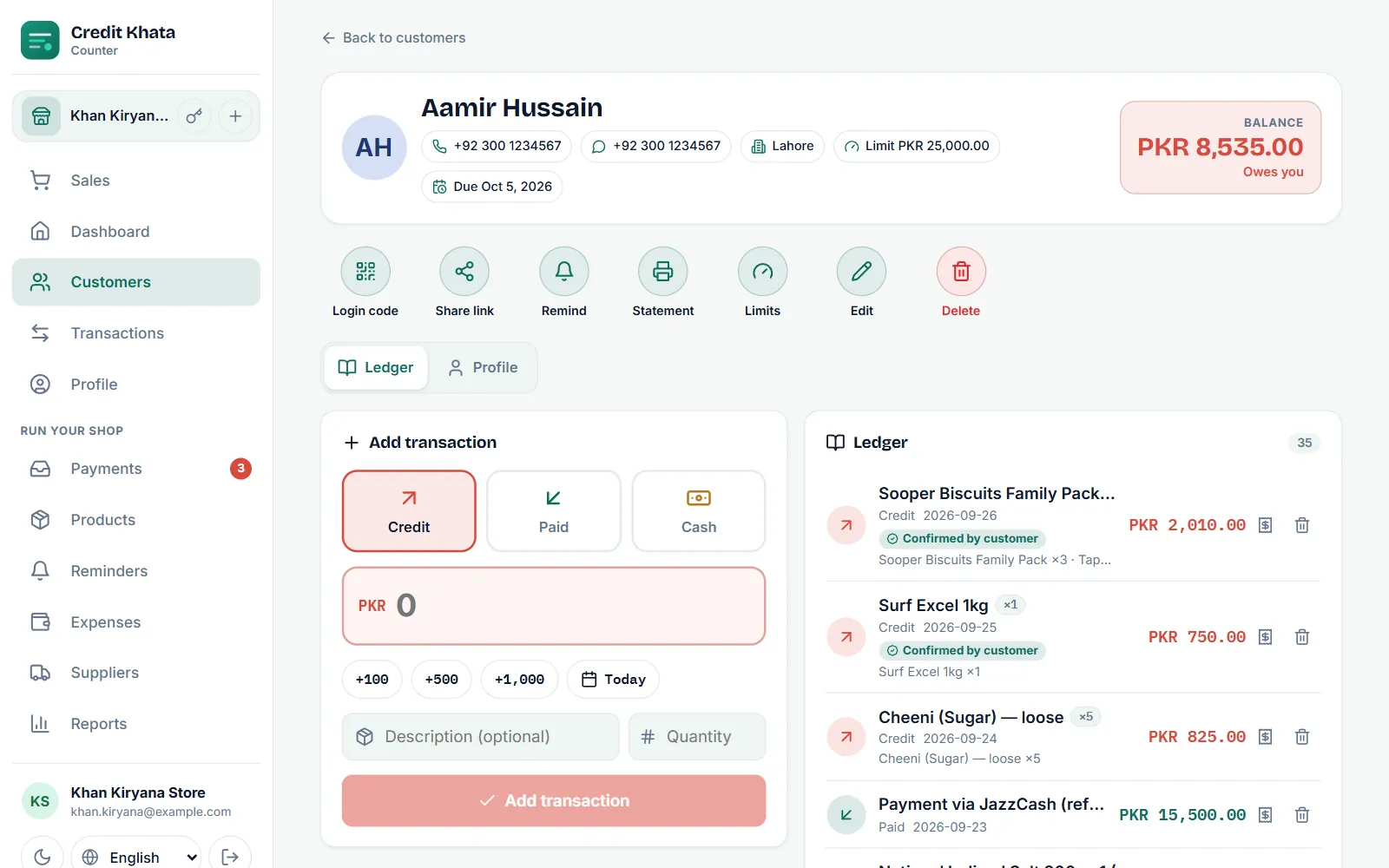
- Limit each customer. A limit keeps a balance at a size the customer can realistically clear. See How to set credit limits for your shop's customers.
- Agree a due date when you open the khata, and repeat it when you remind.
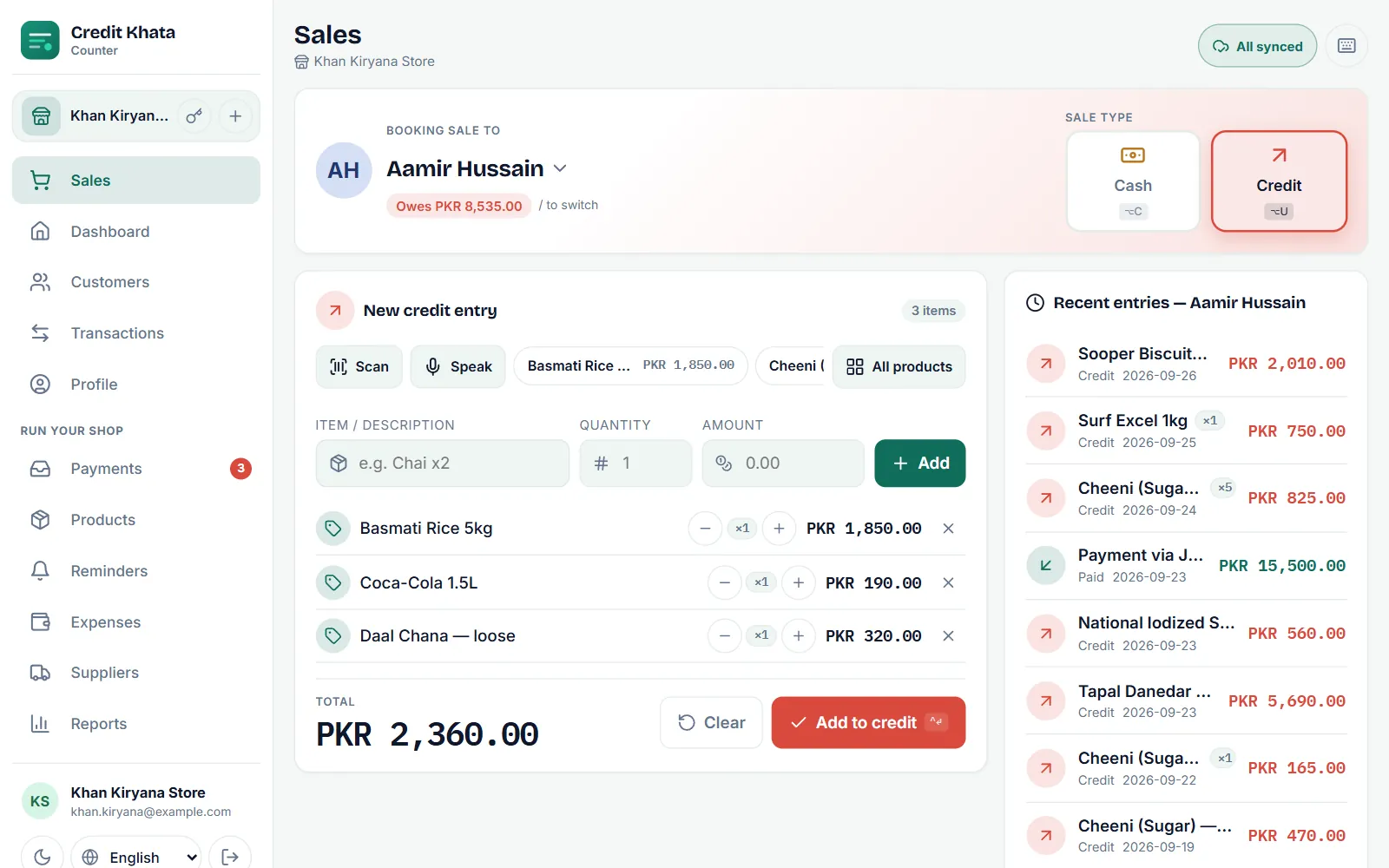
- Write items, not just amounts. "Doodh 2 L, anda 1 dozen" can be checked months later; "Rs 770" cannot.
- Let the customer see the record. When customers can check their own entries as they go, disagreements surface early, while they are small.
- Record every payment immediately, including small part payments, so the balance you remind about is always right.
Know who is actually late
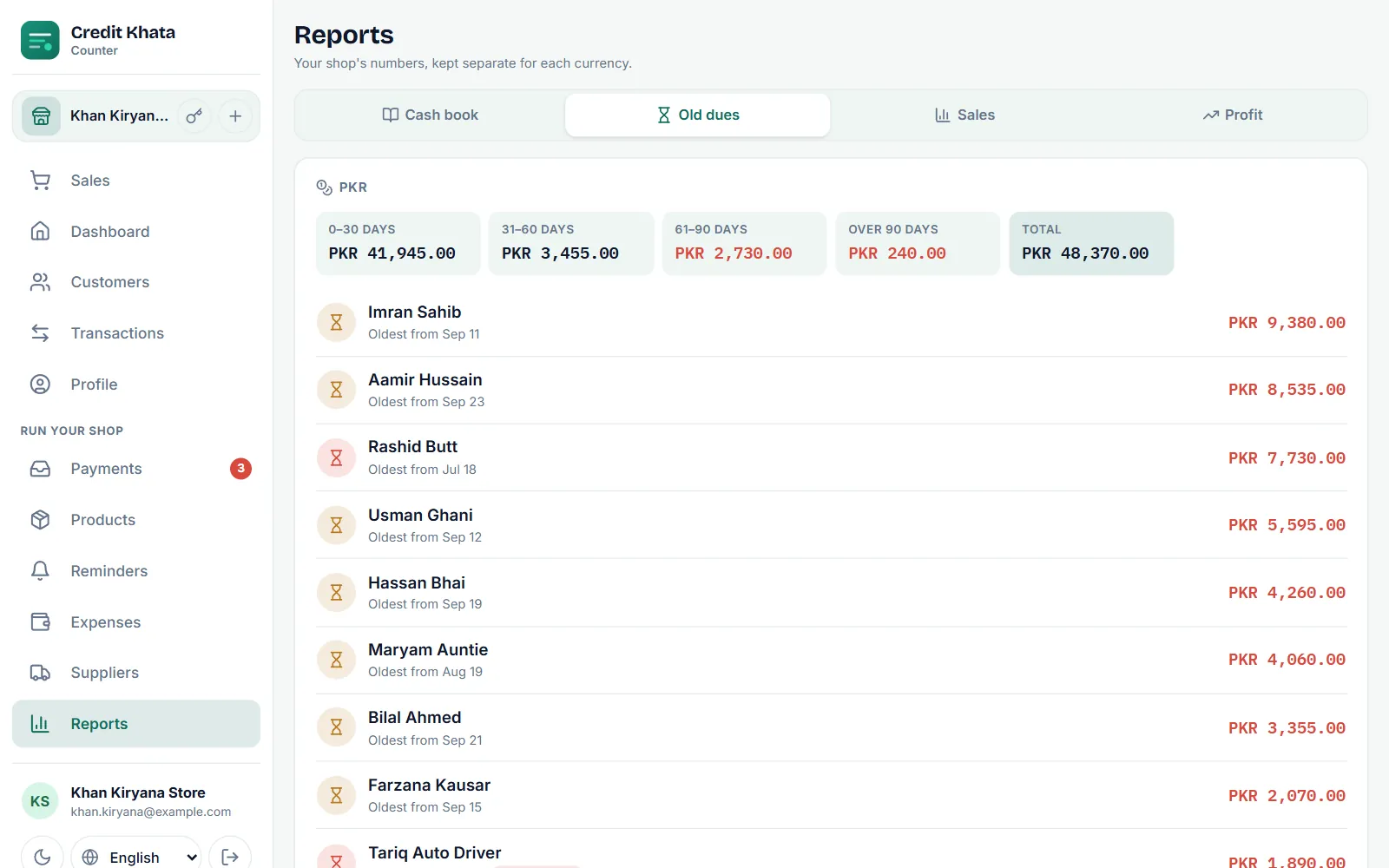
Before you chase anyone, look at the age of what is owed rather than just the size. A large balance built up this month is often safer than a small one untouched for three months.
In Credit Khata, Reports → Old dues does this for you. Payments clear the oldest credit first, so each customer's "Oldest from" date shows the oldest money still unpaid. See Reports: cash book, old dues, sales and profit.
A polite recovery ladder
Move up one step at a time, and give each step a few days to work.
| Step | When | What you do |
|---|---|---|
| 1. Friendly reminder | On or just after the due date | A short private message with the amount and how to pay |
| 2. Second reminder | About a week later | Same tone, with the statement attached or a link to their account |
| 3. Conversation | After 30–60 days | Speak in person or by phone; ask what is possible |
| 4. Payment plan | Same conversation | Agree fixed amounts on fixed dates, and write the plan down |
| 5. Pause new credit | If the plan slips | Cash only until the balance comes down |
| 6. Decide | After a long time with no payment | Decide whether to keep pursuing it or accept the loss |
A few things make every step work better:
- Keep it private. Never remind in front of other customers, and never in a group chat.
- Be exact. "Your balance is Rs 7,730, due on 5 September" is easier to act on than "please clear your dues".
- Make paying easy. Include your JazzCash or Easypaisa number, or a link where they can pay.
- Thank every payment, even a small one. A customer who feels their effort is noticed keeps paying.
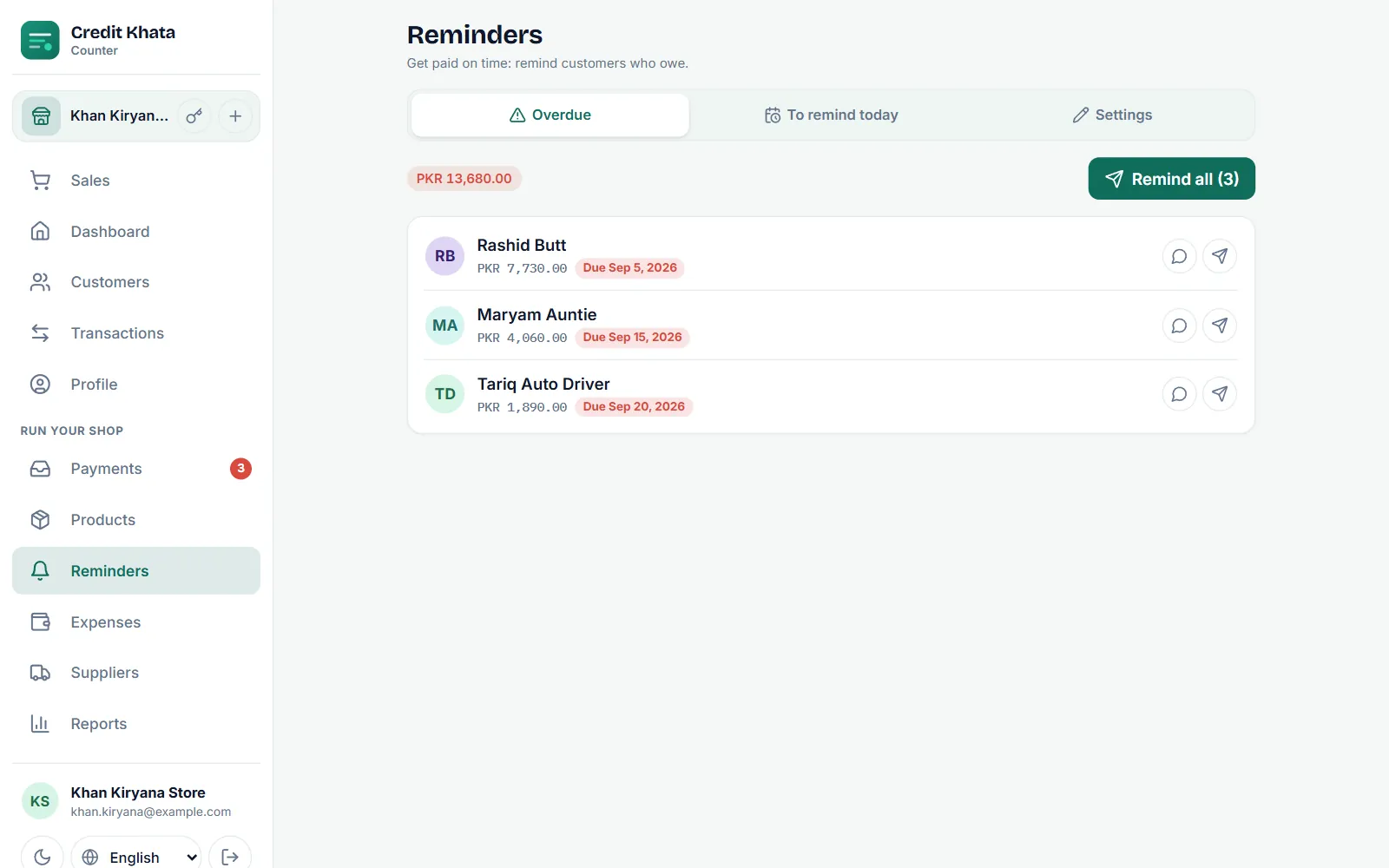
Ready-to-send wording for each step, in English and Roman Urdu, is in WhatsApp payment reminder templates for shops.
When the customer disputes the total
A customer who disagrees with the total will not pay it, however many reminders you send. Treat the dispute as the first thing to settle:
- Go through the entries together, line by line, with dates and items.
- If you find a mistake, correct it and say so.
- If you do not, show them the entry and the items and explain calmly.
- Once you agree the number, agree the plan.
In a shared ledger, the customer can mark the exact entry they question, with a note, and you can reply on that line. The record then keeps both sides of the conversation. See When a customer disputes an entry: check, correct and resolve.
Payment plans that work
- Small and regular beats large and occasional: Rs 1,000 every Saturday is easier to keep than Rs 8,000 "next month".
- Tie dates to income: salary day, the weekly bazaar day, harvest time for agricultural customers.
- Write it down and remind the day before each instalment.
- Keep new credit small until the old balance is under control.
Pausing credit without a scene
Stopping credit is the hardest step socially. Say it privately and plainly: "Until the old balance comes down, I can only give items for cash." Then make the rule enforce itself, so your staff are not put in the middle.
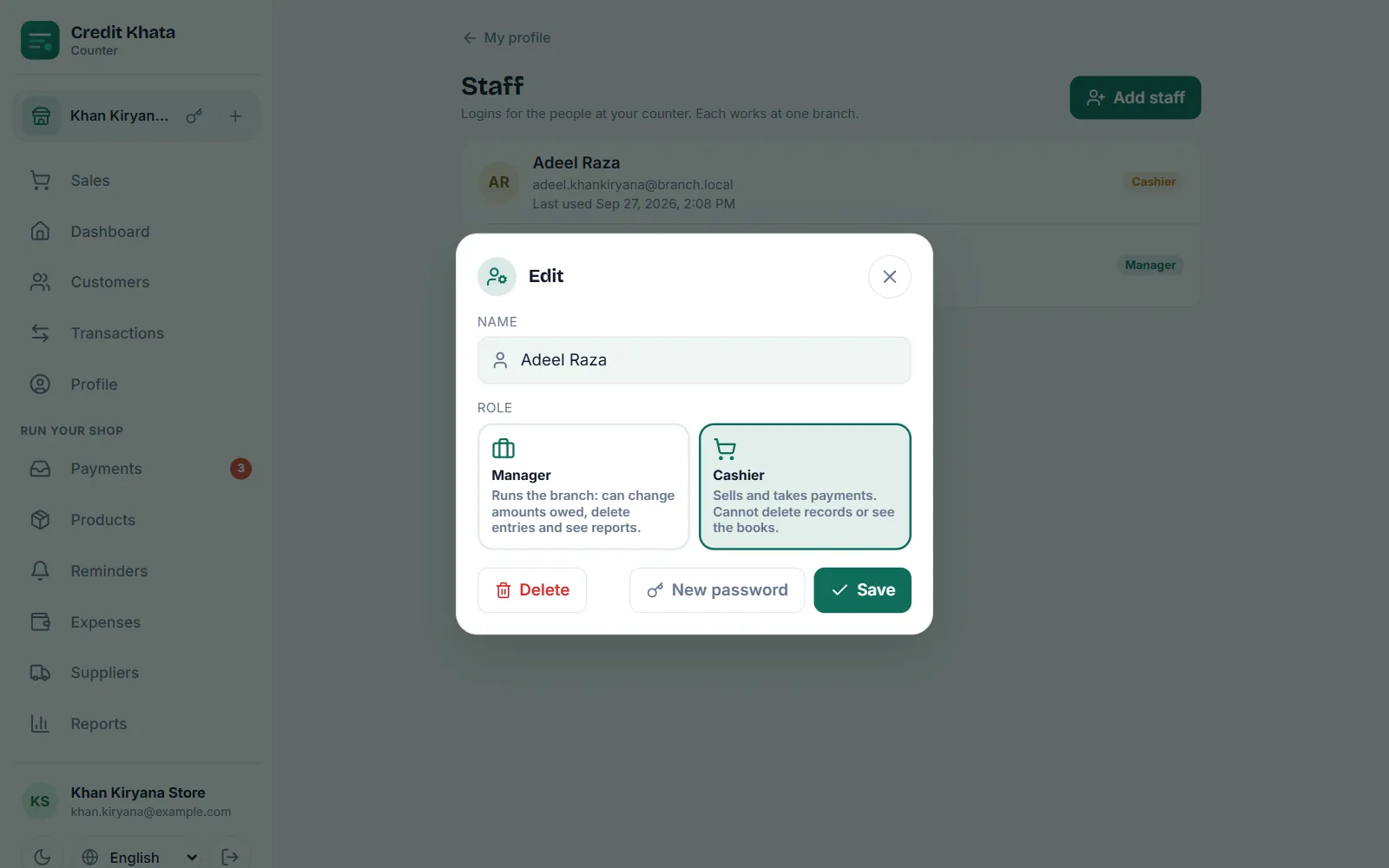
In Credit Khata, set that customer's credit limit to zero under Limits. The counter then refuses new credit for them unless the owner or a manager chooses to go over it, so a cashier never has to argue. When the balance is back under control, raise the limit again.
When to stop chasing
Sometimes a debt will not come back: the customer has moved away, or their circumstances have changed for good. At some point it is better for your time, and your peace of mind, to stop chasing, keep the record, and stop giving credit to that person. If a large amount is involved and you are considering formal steps, get local advice first; the rules differ from place to place.
The short version
- Prevent: limits, due dates, itemised entries, a record the customer can see.
- Watch: the age of what is owed, every week.
- Remind: early, privately, exactly and politely.
- Settle disputes before asking for money.
- Agree small, regular payments.
- Pause credit calmly when a plan slips.
Handled this way, recovering credit becomes a routine part of running the shop, not a fight, and most customers pay.
Frequently asked questions
How soon should I remind a customer?
On the due date or the day after. The longer credit sits without a word, the harder it becomes to collect.
Is it rude to send payment reminders on WhatsApp?
Not if the message is private, short and polite, and gives the exact amount. Most customers prefer a message to being asked in front of others at the counter.
What if a customer says the total is wrong?
Go through the entries line by line with them. If you find a mistake, correct it; if not, show them the dated items. A statement makes this quick.
How do I stop giving more credit to a customer who is not paying?
Stop new credit until a payment plan is agreed. In Credit Khata you can set the customer's credit limit to zero, so a cashier cannot book any more credit for them.
Was this post helpful?