Wetin be credit book? Digital credit book vs paper register
Credit book na shop credit register: who carry goods for credit, and who don pay. Digital credit book dey keep di same record but e dey add totals, backup, reminders and customer view.
For this page
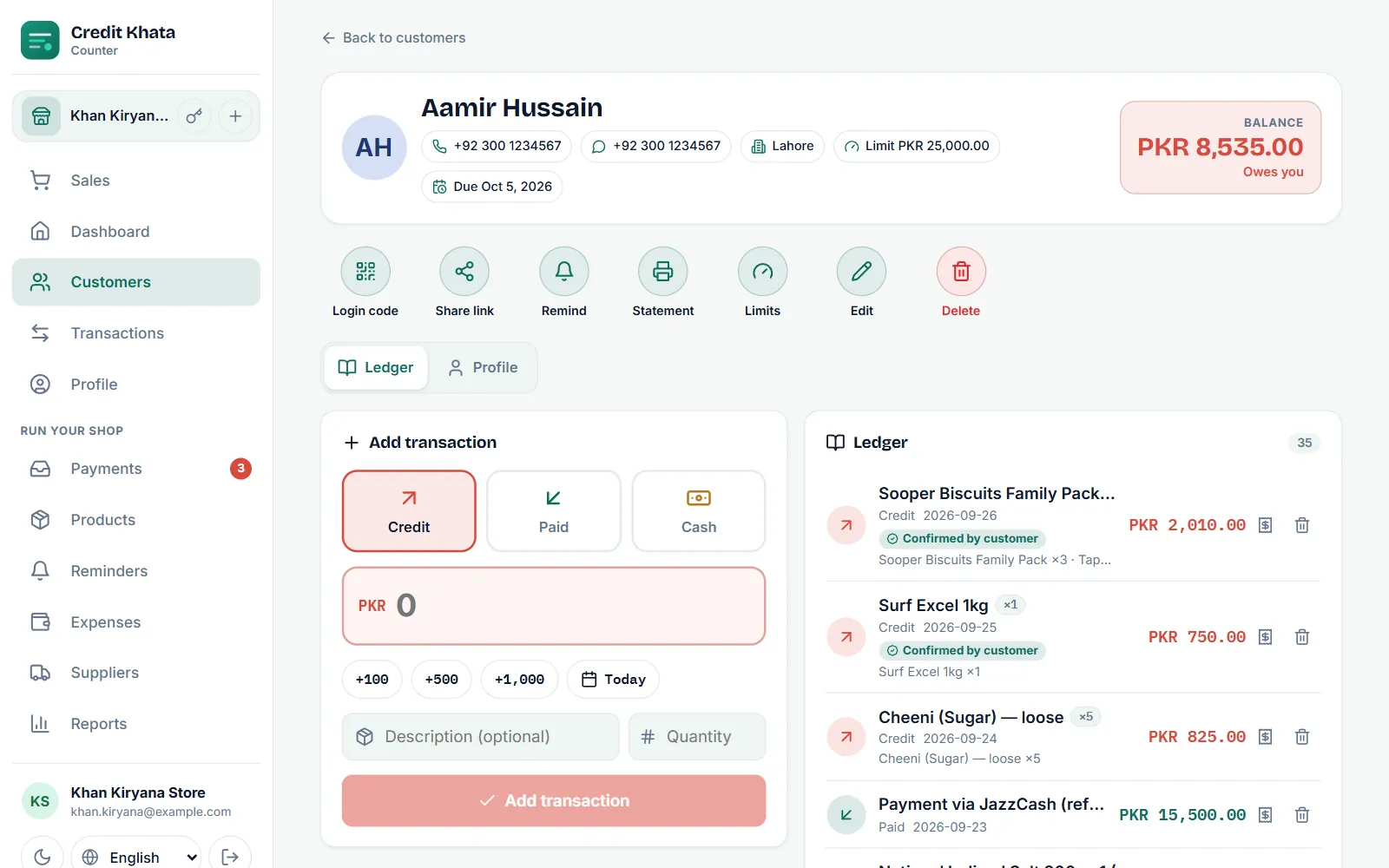
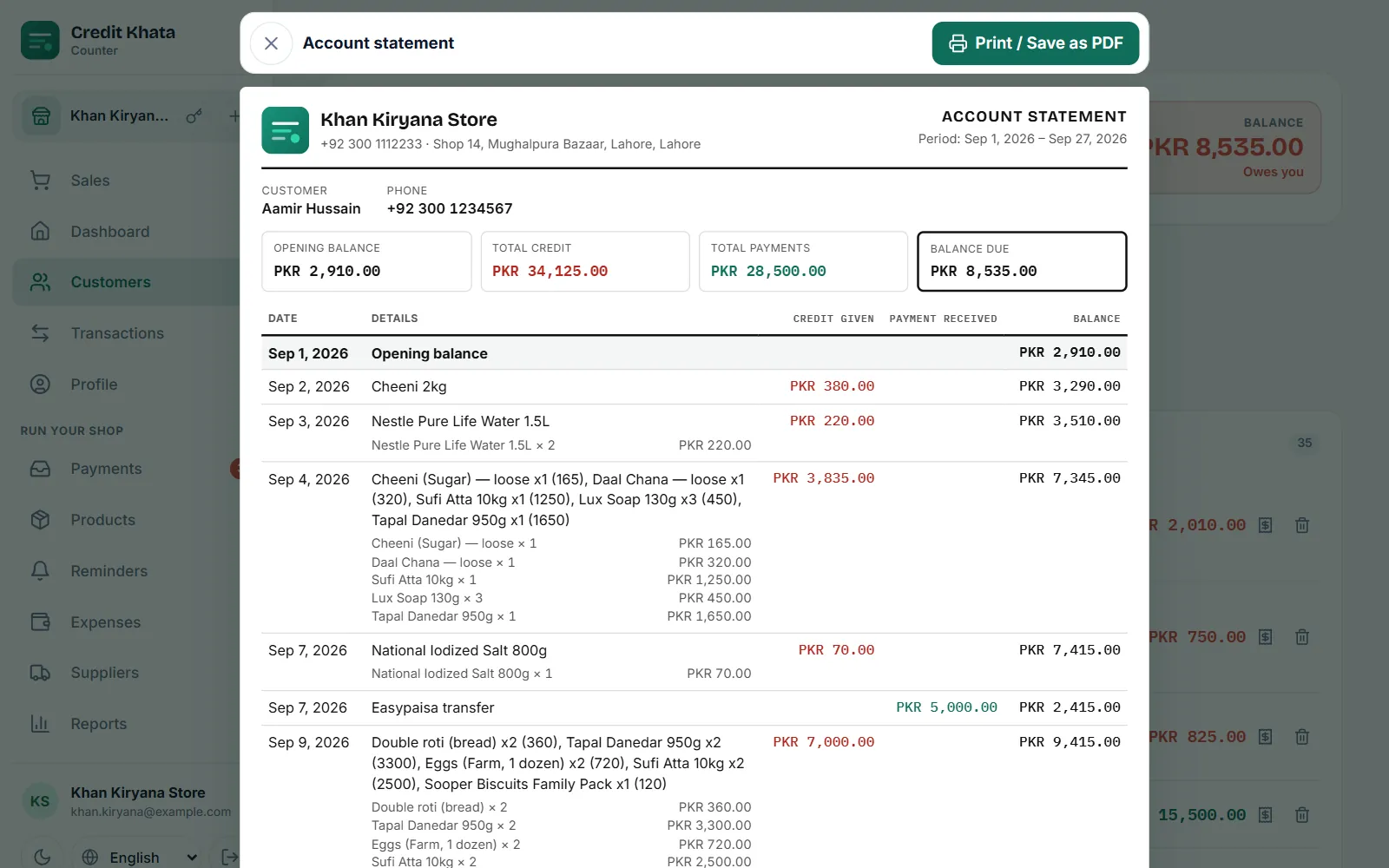
Credit book na shop credit register. Each regular customer get page, and every time dem carry goods for credit, di shop owner go write di date, di items and di amount; every time dem pay, di payment go enter di same page and di balance go come down. Digital credit book dey keep exactly di same record for app, but e dey calculate di totals, keep backup, send reminders, and e fit make di customer see their own page.
Na just book of customer accounts. For Pakistan, India, Bangladesh and other places, provision shop, milk seller, pharmacy and phone repair counter all dey keep one, because to sell on trust give regular customers na how business for area dey work.
How paper credit book dey work
Normal register na long notebook with page, or few lines, for each customer:
- di date,
- wetin dem carry, for example "garri 10 kg, sugar 2 kg",
- di amount,
- and, anytime wey di shop owner get time, running total.
Payments dey written for di same place, often with line across di old total. Some customers dey keep their own small copy; most dey depend on memory and on wetin di shop owner talk. For di end of di month, or for salary day, di shop owner go add up di page and tell di customer wetin dem owe.
E cheap, e no need light, and everybody understand am. Na why e don last reach today.
Where paper register dey fail you
Di wahala with paper no be di paper. Na wetin dey happen around am.
- Two versions of di truth. Di shop get di register; di customer get their memory. When di two no agree, nothing dey for di customer side to check, and di talk go turn quarrel for di counter.
- Calculation by hand. Dem dey add running totals quick quick, between customers. One mistake go carry go every total after am.
- Only one copy. Tea wey pour, roof wey dey leak or notebook wey lost fit wipe months of credit, and no backup dey.
- No overview. Register dey tell you wetin one customer owe when you open their page. E no dey tell you who don owe for three months, or how much credit di whole shop dey carry.
- Nobody dey remind anybody. To collect depend on whether di shop owner remember to ask, and plenty people dey shy to ask.
- Hard to share. When son, brother or salesboy dey run di counter, dem go either use di same book, without record of who write wetin, or write for loose paper wey dem go copy later, or dem no go copy am.
- Everybody fit read am. Any customer wey stand for di counter fit see other people pages.
Wetin digital credit book dey change
Digital credit book dey keep di idea wey everybody know: one account for each customer, credit in, payments out, balance. Wetin change na everything around di record.
| Paper register | Digital credit book | |
|---|---|---|
| Running balance | Dem dey add am by hand | E dey always calculate |
| Wetin dem carry | Anything wey fit di line | Items, quantities and amounts for every entry |
| Backup | Nothing | E dey stored for server, no be only for di counter |
| Wetin customer fit see | Their memory | Their own account for their phone |
| Who dey owe, and for how long | Flip every page | List wey dem arrange by how old di debt be |
| Reminders | Remember to ask | WhatsApp or SMS messages wey don already write |
| Plenty people for di counter | One book, no names | Separate logins, each entry dey record who make am |
| E dey work without network | Always | Only if di app na offline-first |
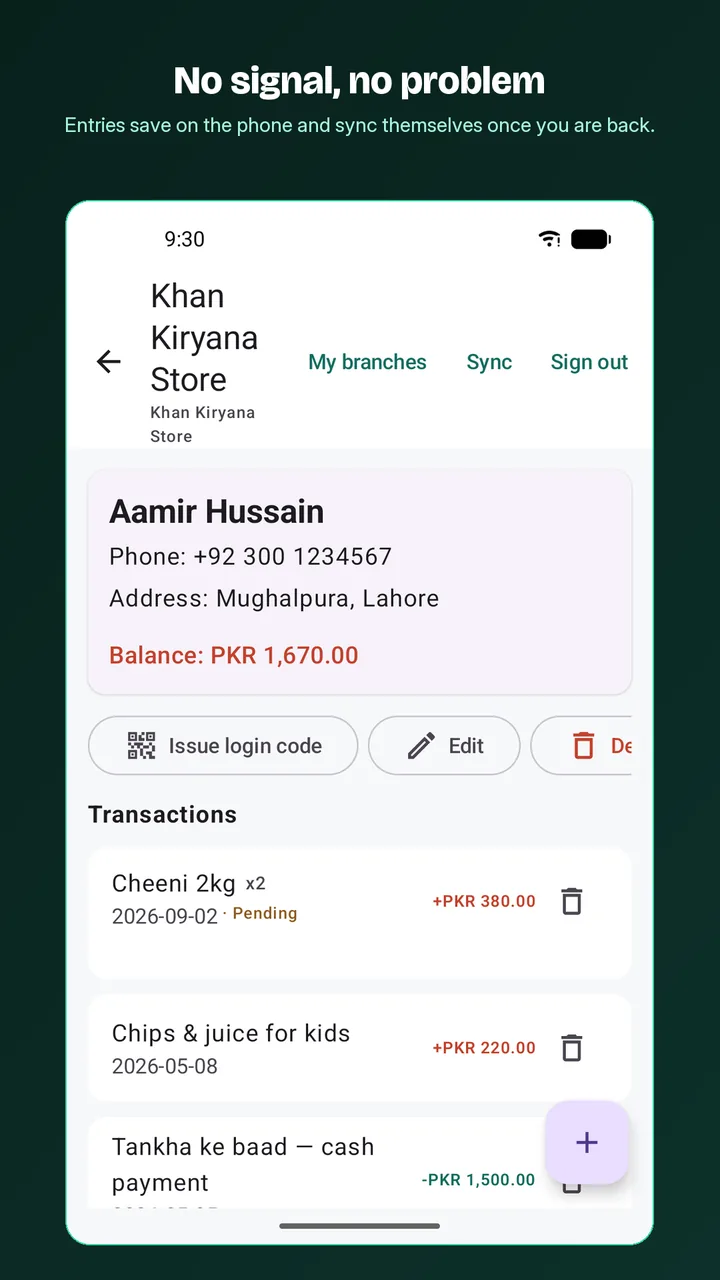
Di last row matter. Shop counter na exactly where network dey cut, so good digital credit book dey save entries for di device first and upload dem later. We explain why for Why offline-first ledger matter for small shops.
Shared ledger: di customer dey see di same page
Di biggest change no be di calculation; na who fit see di record. For shared ledger, di customer dey open di same account wey di shop dey write, for their own phone. Dem dey see each entry, wetin e be for, and di balance, as di shop record am.
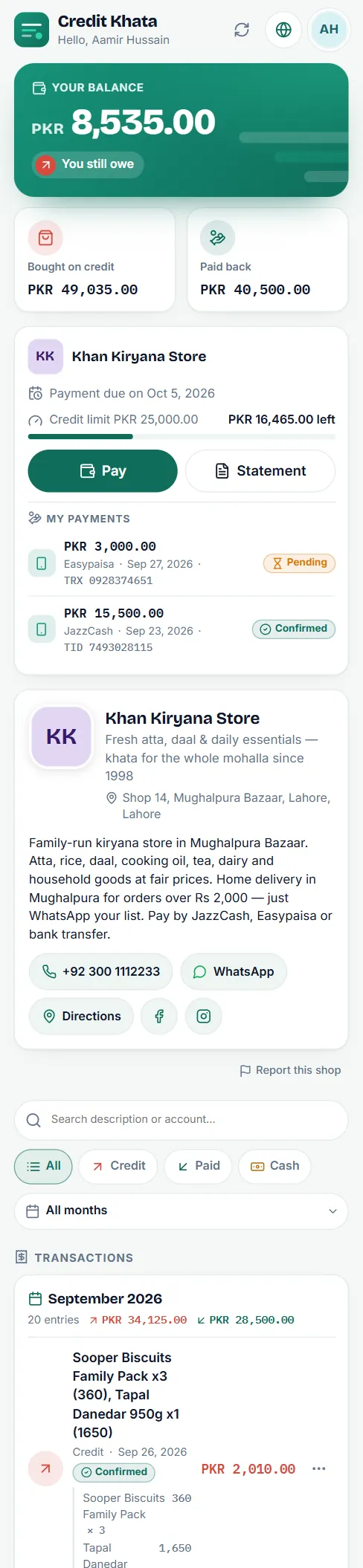
Dat one dey remove most quarrel before e start. When customer fit point at one line and talk "Na one packet I take, no be two", di shop fit check dat line, correct am, and reply, and both sides go keep di note. E also dey make payment easy: di balance, di due date and di shop payment details dey di same place.
Na so dem build Credit Khata. Di shop dey write di entry for di counter; di customer dey open their account from link or short code, for any phone browser, without to install anything, and e always free for customers. How customers dey use am dey for For customers: open your account, check entries and pay di shop.
When paper still dey okay
Paper no wrong. Shop wey get only few credit customers wey all dey pay on time fit never need more. And some shop owners dey keep paper book as habit beside app.
If you dey do both, choose one as di record. To write every entry two times na where di old wahala of two versions of di truth dey come back. Most shops wey change dey keep di old register as archive and dey write new entries only for di app.
Wetin to look for inside digital credit book app
- E dey work offline, so di counter no go ever wait for network.
- Customers fit see their own account, no be only to receive message.
- Items and quantities for each entry, no be only amounts.
- Your language and script, including Pidgin, and right-to-left for Urdu.
- Opening balances, so you fit carry over wetin di paper book talk.
- Staff logins with roles, if anybody else dey work di counter.
- Exports, so dem no go ever lock your data.
- No cut from your payments. Customers suppose pay you direct.
How to start
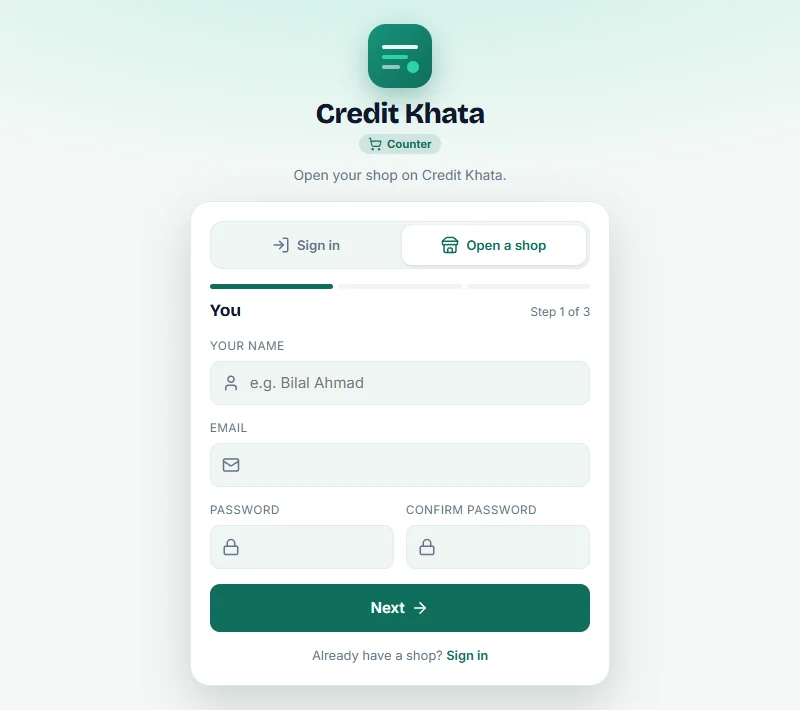
If you dey keep register today, di change na mostly about one date and one set of opening balances. Our step-by-step guide cover am: How to move from paper credit register to app, step by step. To set up Credit Khata itself, see Open your shop account, den add your first customer. Free plan dey, and every new shop dey get one month of Pro to try everything.
Questions wey people dey ask
Wetin selling for credit mean?
E mean goods or money wey you give now, wey dem go pay back later. For shop e normally mean say customer go carry foodstuff now and pay for di end of di week or month.
Digital credit book better pass paper register?
For most shops wey get regular credit customers, yes: di totals dey always correct, di record get backup, and customers fit see am. Very small book with only few customers fit still work well for paper.
My customers fit see their own account for digital credit book?
For shared-ledger app like Credit Khata, yes. Di customer dey open di same account wey di shop dey write, for their own phone, from link or code.
I need internet for digital credit book?
No be all di time. Offline-first app dey save entries for di device and upload dem when network come back.
This post help you?